FEA
Optimise FEA’s homepage for donor conversions and streamline the donation process.
Year
2024
Timeline
7 Weeks
Category
Not-for-profit
Service
Web Design, UX Design
Goal
Food Education Australia’s website struggled to clearly communicate its mission, impact, and value, resulting in low engagement and donation conversion. Users found it difficult to: - Quickly understand the organisation’s purpose - Navigate key information - Feel emotionally connected and motivated to take action The challenge was to redesign the digital experience to build trust, emotional connection, and clarity, while supporting donation-driven business goals.
Result
Designing a Clear, Engaging & Conversion-Focused Non-Profit Experience Through user-centred research and UX strategy, I redesigned the homepage experience to: - Clearly communicate FEA’s mission and impact - Improve information hierarchy and navigation - Strengthen emotional storytelling - Optimise the donation journey The solution balanced empathy-driven storytelling with conversion-focused UX, creating a more meaningful and effective digital experience.
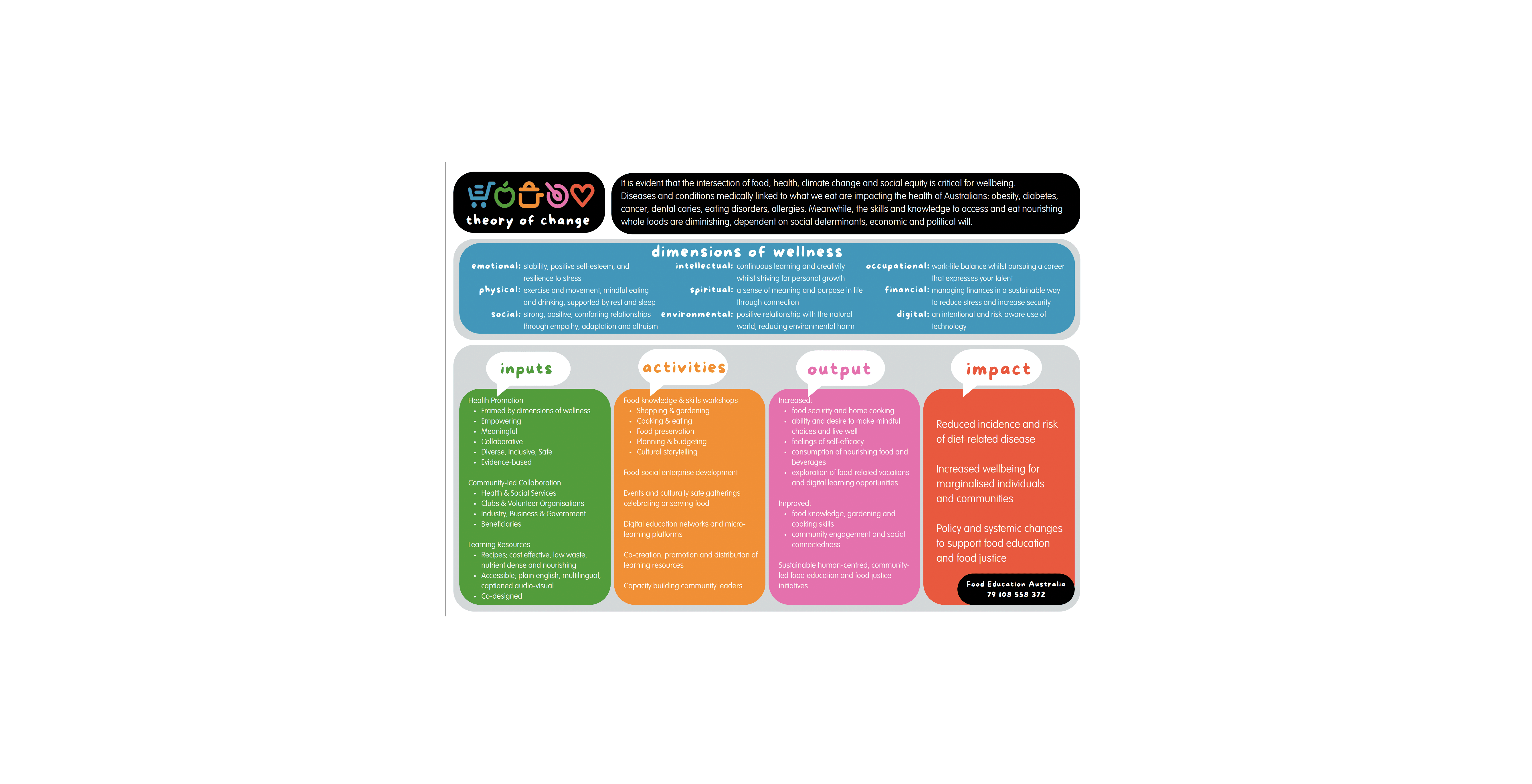
Insights from stakeholder interviews
The project aimed to shift FEA’s engagement model toward a grassroots, community-driven approach, focusing on middle- and low-income donors through transparent and impact-led initiatives. Key strategic directions included: - Building an online engagement platform to strengthen donor and volunteer participation through meaningful and balanced recognition - Enhancing food safety education and volunteer training to improve service quality and community impact - Addressing food insecurity through culturally appropriate food distribution, supported by collaborations with universities and local community organisations - Rebranding to engage new and younger audiences through compelling storytelling and clearer mission communication - Targeting small contributions at scale, supported by refined user journeys and improved digital experience design Shifted engagement strategy toward grassroots participation by combining community-driven storytelling, accessible digital experiences, and scalable micro-donation models.
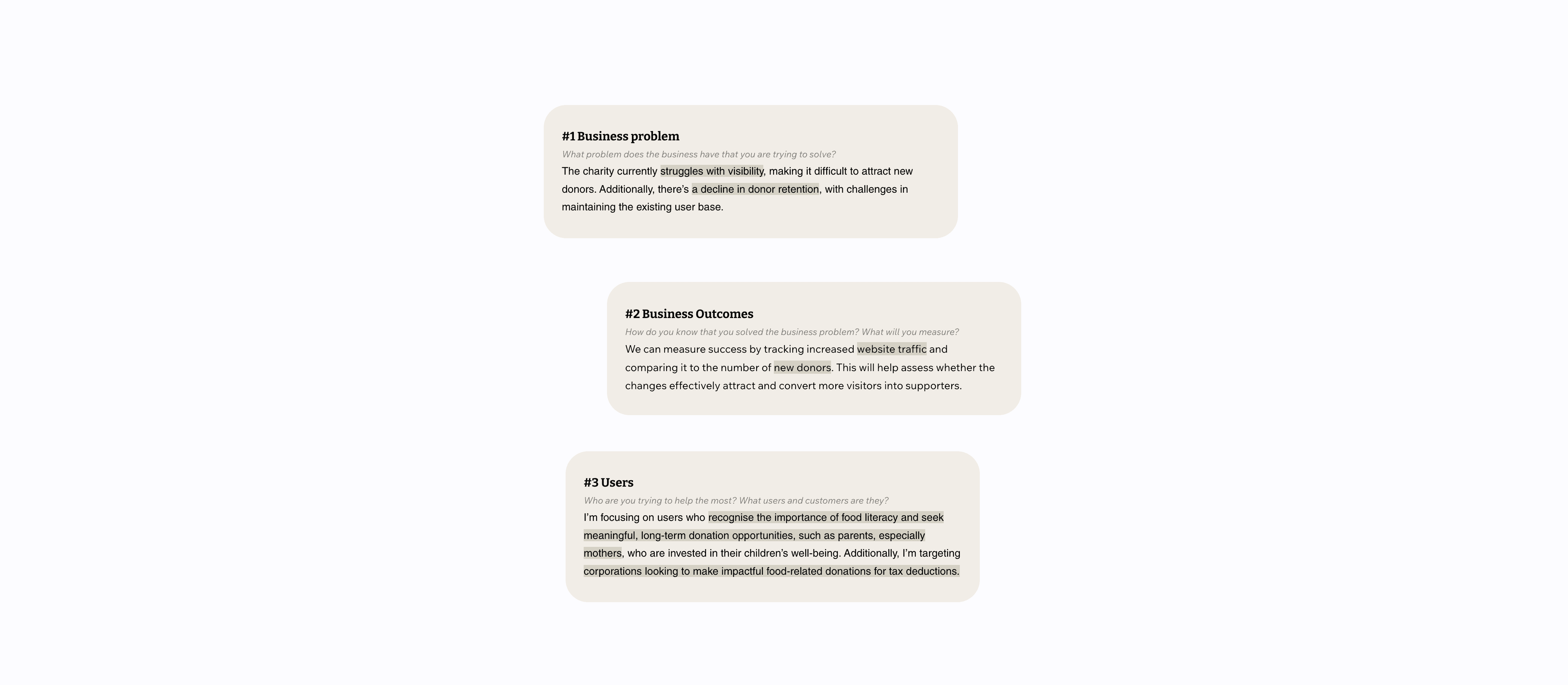
UX Opportunity Canvas
Based on stakeholder insights, I created a UX Opportunity Canvas to clearly define the business problem, success metrics, and target users, ensuring that design solutions were strategically aligned with both business objectives and user needs. 1. Business Problem The charity struggled with low brand visibility, making it difficult to attract new donors. Additionally, declining donor retention created challenges in maintaining long-term supporter relationships and sustainable growth. 2. Business Outcomes To evaluate success, we focused on: - Increased website traffic - Growth in new donor acquisition - Improved donor retention - Higher visitor-to-donor conversion rates These metrics helped measure whether the redesigned experience effectively attracted, engaged, and converted users into long-term supporters. 3. Target Users The primary user groups included: - Parents, particularly mothers, who value food literacy and seek meaningful, long-term donation opportunities that support their children’s wellbeing - Corporate donors, looking to make impactful food-related contributions with tax-deductible benefits This segmentation ensured the experience addressed both emotional motivations and practical decision-making needs. A strategic UX framework aligning organisational growth goals with emotionally driven donor engagement and long-term retention.

Competitive Analysis
I conducted a competitive analysis to understand market trends, benchmark performance, and identify strengths, weaknesses, and opportunities. Eight organisations were selected and categorised into direct and indirect competitors based on geographic location and service focus. Key insights included: - Strong platforms leveraged authentic storytelling and real-life imagery to build trust. - Clear value propositions helped users immediately understand mission and impact. - Simple navigation and mobile-optimised design significantly improved engagement and accessibility. - Inconsistent branding and complex information architecture increased user friction. These findings directly informed the information architecture, content strategy, and visual direction. Strategic Direction Based on research insights, I proposed: - A story-driven UX approach to highlight real impact - A simplified donation and volunteer journey - Balanced recognition systems to motivate small contributions at scale - Clear communication of food safety, education, and community impact The final concept positioned FEA as a trusted, emotionally engaging, and impact-driven organisation, enabling stronger connections with donors and volunteers while supporting long-term growth and social change.
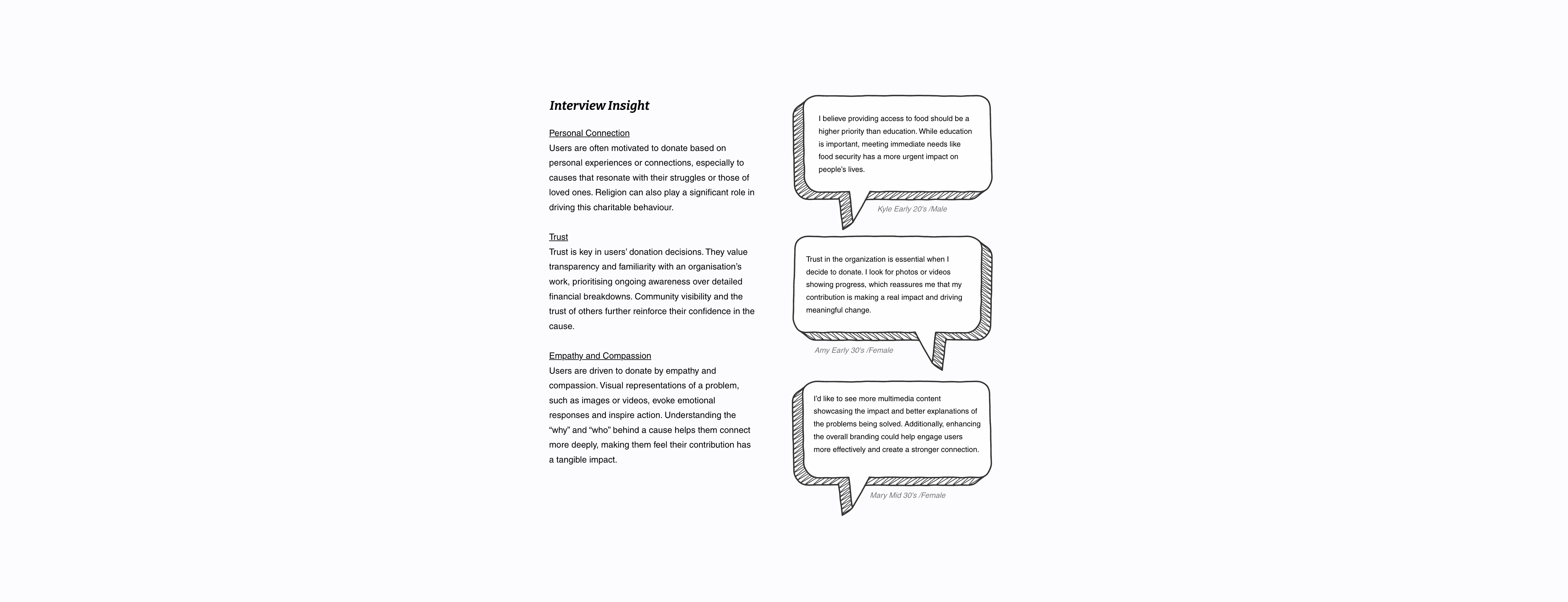
User Interviews & Key Insights
To gain a deeper understanding of user motivations, pain points, and donation behaviours, I conducted in-depth interviews with three participants who had prior donation experience and interacted with the FEA website. The sessions focused on exploring emotional drivers, trust factors, and usability challenges across the donation journey. Key insights included: - Personal Connection Users are strongly motivated to donate when they feel a personal or emotional connection to the cause. Experiences related to family, upbringing, or personal struggles significantly influence their willingness to contribute. - Trust & Transparency Trust plays a critical role in donation decisions. Participants valued transparency, real-world impact stories, and visual proof such as photos and videos that demonstrate how donations are being used. Community visibility and social proof further strengthened their confidence. - Empathy & Emotional Engagement Emotional storytelling and compelling visual content were key drivers of engagement. Users wanted to better understand the why behind the cause and see tangible outcomes, which helped them feel their contribution made a meaningful difference. These insights informed key UX opportunities, guiding design decisions to improve emotional engagement, trust-building, and overall usability across the donation experience.

User Persona & Journey Map (Group Work)
I collaborated with a team of three designers to develop a comprehensive User Persona and Journey Map. Our process was grounded in direct user interviews, ensuring that our design decisions were backed by real human experiences and qualitative data. Key Research Findings Through our synthesis of user interviews, we identified three critical barriers preventing users from engaging or donating: - Lack of Communication Channels: Users felt disconnected due to a lack of direct ways to interact with the organization. - Missing Emotional Connection: The digital experience failed to evoke the empathy required to drive meaningful action. - Absence of Social Proof: Users were hesitant to contribute without seeing the tangible impact of others' contributions or validated results. Key Insights (Voice of the User) Our research highlighted a deep-seated need for transparency and appreciation. Two major insights from our collaborative study include: - The Desire for Impact: Users have a strong core belief in community support but need to see the specific outcome of their contribution to feel satisfied. - The Trust Deficit: In an era of online scams, users require significant "trust signals" to feel secure. They want to feel both trusted and appreciated by the organization before committing.
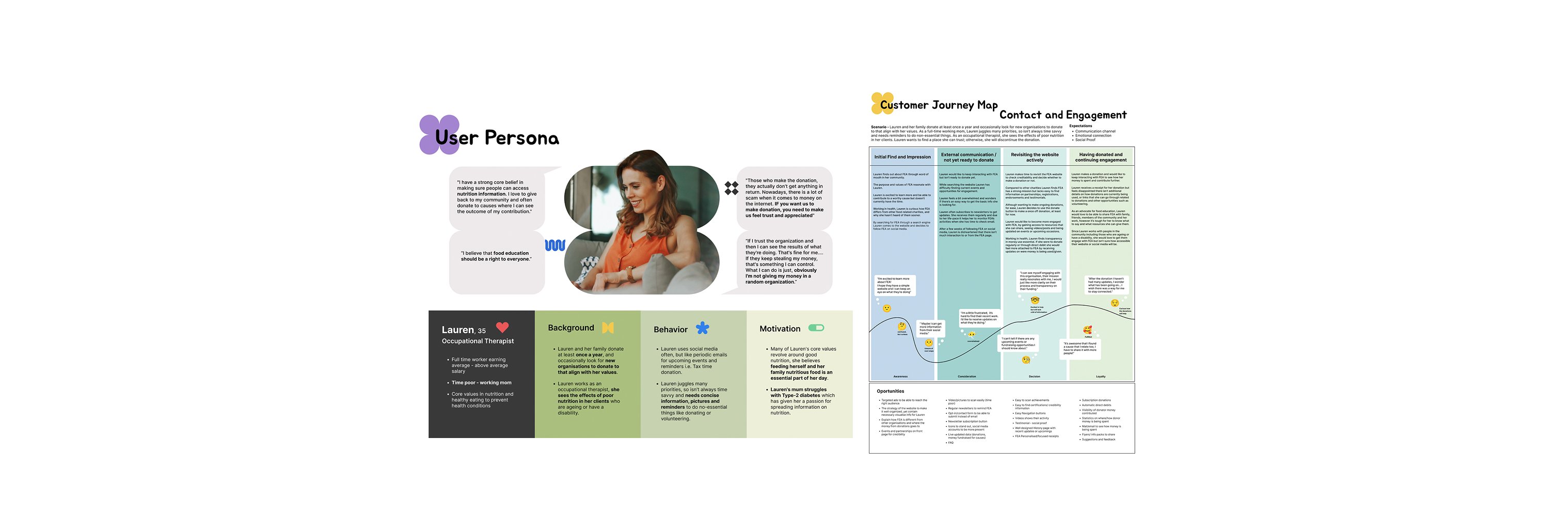
Persona, User Journey Mapping & Opportunity Discovery
I collaborated with a team of three designers to synthesize insights from user interviews. We developed our primary persona, "Lauren" (35, Occupational Therapist), to represent our target audience: a time-poor professional who deeply values community support but suffers from a "Trust Deficit" due to a lack of transparency in digital platforms. The Three Key Findings Through our research synthesis, we identified three critical barriers that prevent users like Lauren from engaging: - Communication Gaps: A lack of direct, two-way channels between the organization and the user. - Emotional Detachment: The digital experience felt "faceless," failing to build a personal or empathetic connection. - Social Proof Deficit: Users were hesitant to contribute without seeing the tangible, verified impact of others' actions. User Journey Mapping & Pain Points We mapped the user’s emotional journey to identify exactly where engagement drops. - The Dip: We found a significant "mood drop" during the External Communication phase. - The Cause: Users felt overwhelmed by cluttered information and a lack of scannable, real-time updates on current events. Strategic Opportunity Insights Based on the pain points discovered in the Journey Map, we identified key areas for UX intervention: - Awareness & Trust: Opportunity to convert skeptics by using targeted messaging and live transparency tools (e.g., real-time donation trackers). - Decision & Action: Opportunity to reduce friction by implementing scannable achievements and verified social proof (testimonials/certifications). - Loyalty & Retention: Opportunity to create a "Loyalty Loop" through personalized impact receipts that make the user feel "trusted and appreciated." By addressing these opportunities, we shift the user experience from a one-time interaction to a long-term relationship built on transparency, emotional connection, and proven impact.

Opportunity Insights
Derived from our User Persona and User Journey Map, these insights highlight the key areas where the user experience can be transformed to encourage ongoing support and long-term loyalty. Enhancing Navigation & Visual Scannability - Simplify Navigation: Streamline the website structure and enhance Call-to-Action (CTA) buttons for frictionless movement. - Visual-First Strategy: Use videos and images to allow for quick scanning, specifically catering to time-constrained users. Building Credibility & Trust - Transparency: Provide clear, detailed information on how donations are used to build immediate donor trust. - Proof of Impact: Add a dedicated credibility page on the homepage to showcase certifications and history. - Addressing Concerns: Include a comprehensive FAQ section to proactively resolve common user doubts. Driving Conversion & Seamless Payments - Flexible Giving: Offer easy donation options, including subscriptions and automatic payments. - Personalized Confirmation: Provide personalized receipts that acknowledge the individual's specific impact. Fostering Long-term Loyalty & Advocacy - Top-of-Mind Awareness: Implement regular newsletters and a prominent subscription button to maintain ongoing engagement. - Community Growth: Enable users to share the cause through digital flyers or information packs to boost organic awareness. - Continuous Improvement: Establish a system for gathering user feedback to constantly refine the digital experience.

Landing Page Design & Usability Testing
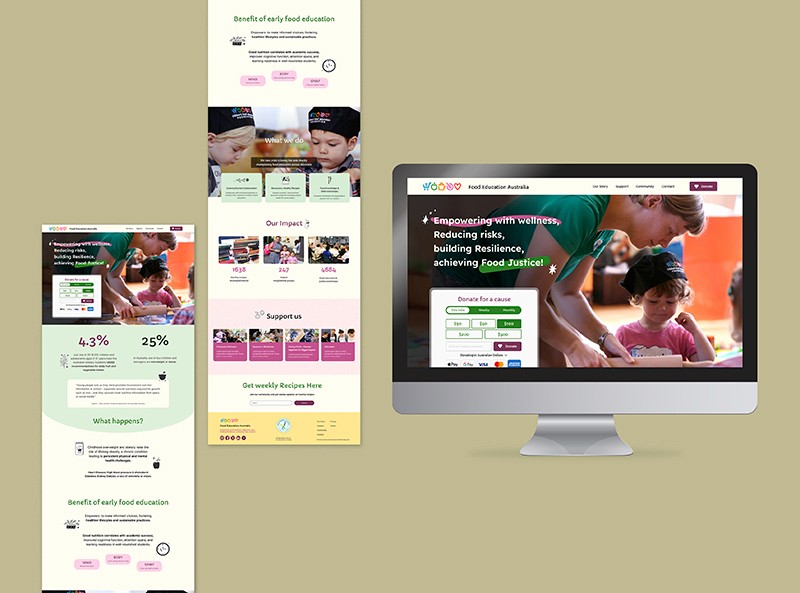
Following the competitive audit and user research, I developed a high-fidelity landing page in Figma designed to bridge the "Trust Gap" and address the identified "Social Proof Deficit". This design served as the foundation for targeted usability testing to validate our core hypotheses. Design Implementation & Trust Building - Strategic Accessibility: Implemented a fixed 'Donate' button at the top of the page to ensure the primary call-to-action is always accessible, directly addressing the persona's need for seamless interaction. - Authority & Credibility: Added a dedicated section highlighting food education for children and real-time organizational activities to build trust and emotional connection with users like "Lauren". - Engagement Loops: Integrated a weekly educational recipe sharing feature to provide immediate value to users, reinforcing the importance of the cause and encouraging regular site revisits. Usability Test Plan Dashboard - Objective: To determine if users are willing to donate after visiting the FEA website and if they can complete the donation process without "hustle". - Participants: Conducted testing with 3–5 women aged 30–50 who expressed a prior interest in charitable donations, aligning with our primary user persona. - Key Tasks: Users were asked to navigate the landing page, express their understanding of FEA's mission, and attempt the donation process while "thinking out loud" to reveal cognitive friction. Critical Feedback & Iterative Insights The usability testing with four participants provided essential qualitative feedback to refine the user experience: - The Urgency Gap: Users expressed a need for a stronger emphasis on the urgency of the food education deficit to feel more compelled to take immediate action. - Information Density: Feedback indicated the page was still too text-heavy, suggesting a need for more strategic positioning and visual hierarchy. - Visual Accessibility: Testers recommended enhancing color contrast and visual details to improve readability, particularly for "time-poor" users who need to scan information quickly. This testing phase validated that while trust-building elements were effective, further refinement of visual scannability and emotional urgency is required to fully convert awareness into long-term donor loyalty.
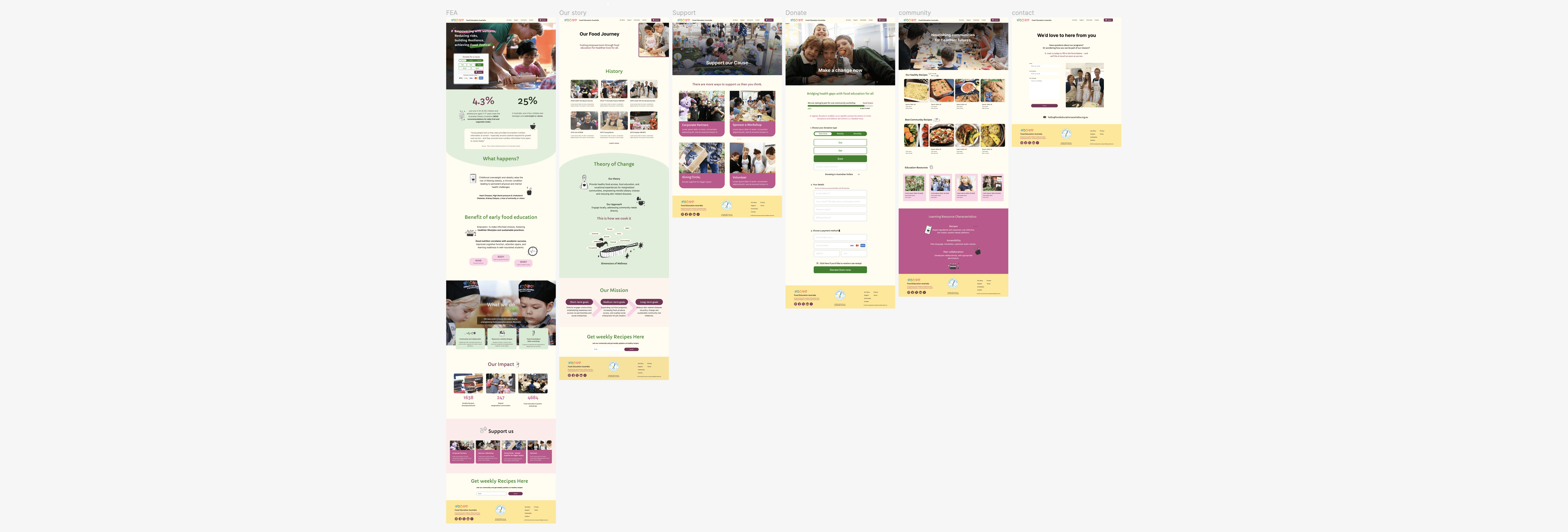
An Intuitive, Inspiring, and Trust-Driven Digital Experience
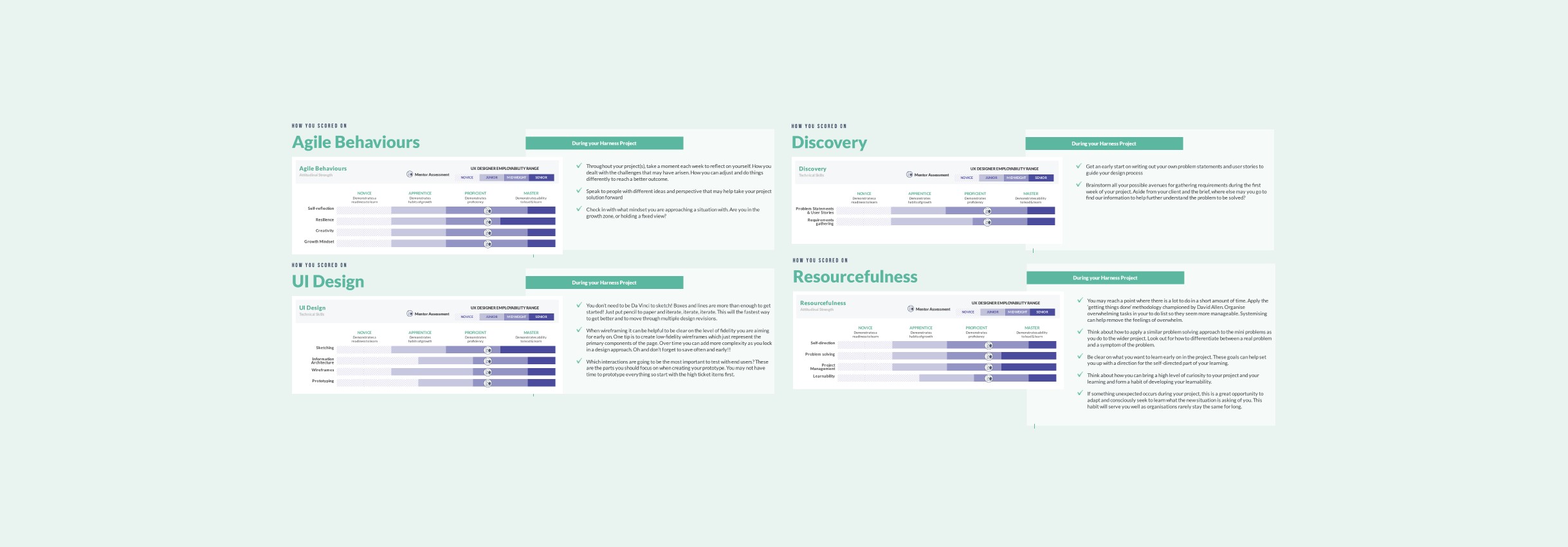
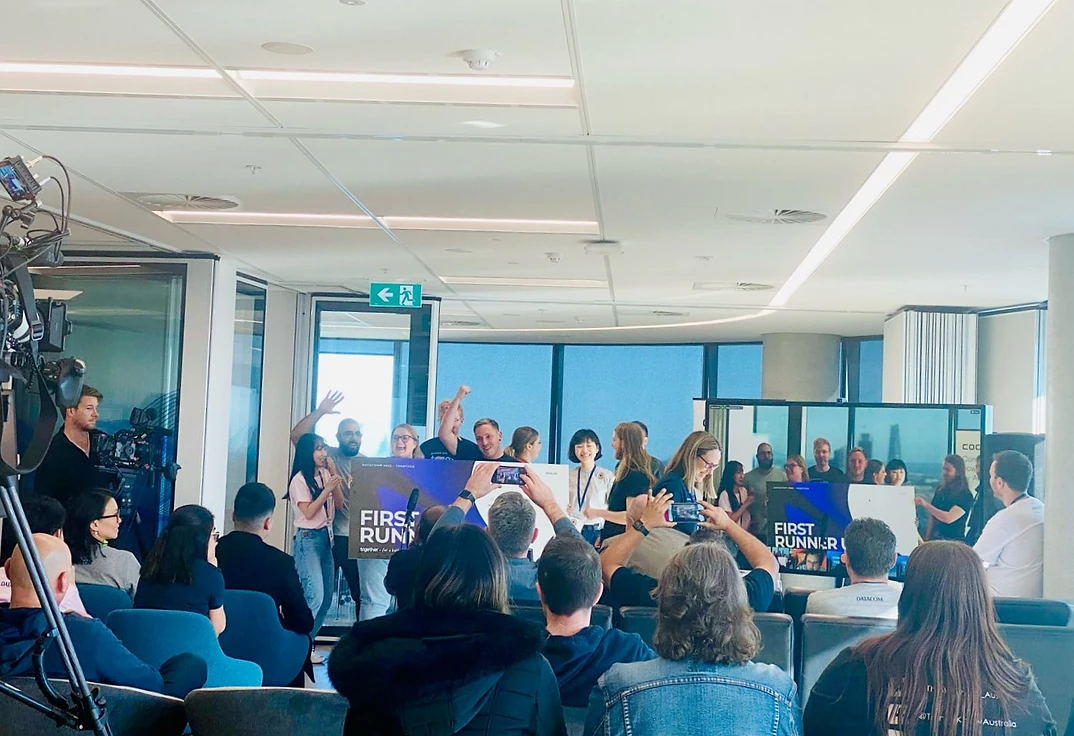
Mentor evaluations
Through mentor evaluations, I was recognised for strong performance in Discovery, Resourcefulness, Agile ways of working, and UI Design, demonstrating capabilities aligned with a Midweight Designer level.